The Essentials
District 3 includes New Smyrna Beach, and is one of four County Council seats up for election this year.
Proposed steps to control development and address flooding depend on allies winning other seats.
There won’t be a primary for District 3 unless one or more additional candidates emerge before June, in which case the primary will be in August.

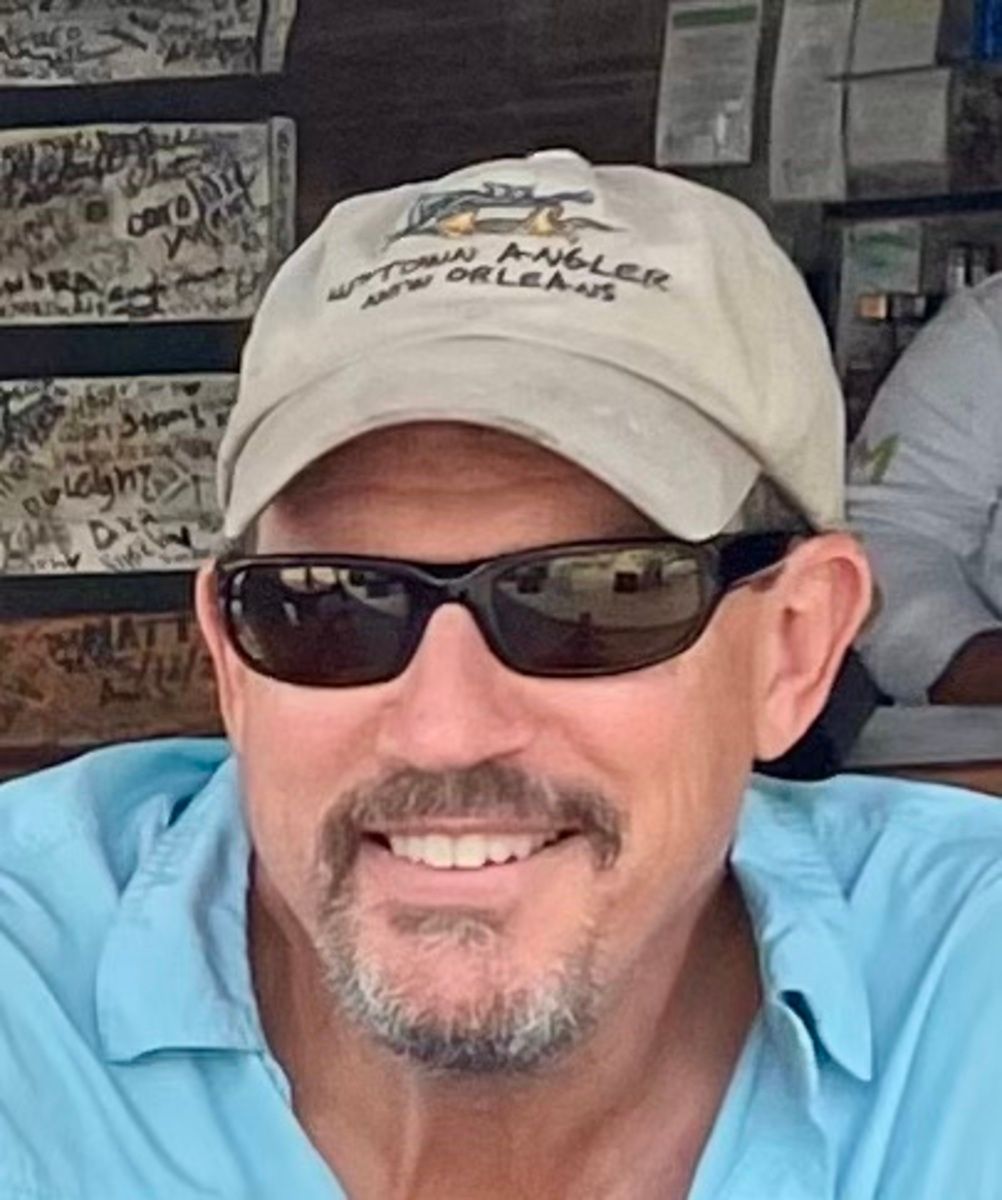
Incumbent Danny Robins, left, faces Bryon White, founder of the Slow the Growth organization, in the race for the District 3 seat on the Volusia County Council. Credit: Robins, White campaigns
The Story
Deep into a town hall meeting last fall about Volusia County’s flooding crisis, the standing-room-only crowd began to turn against County Chair Jeff Brower. He had just urged attendees to think carefully about who they vote for if they want to stop the practice of constructing planned communities on plateaus of fill placed on land annexed from the county. Brower and others blame runoff from communities like those for inundating older, surrounding neighborhoods. The most infamous weather triggers were Hurricanes Ian and Milton with their 22 and 14 inches of rain. Their surges of seawater blocked the floodwater from draining to the ocean through the area’s creeks, canals and bays. The result was widespread flooding in New Smyrna Beach, Port Orange and beyond. Days before the town hall, strong thunderstorms rolled in coinciding with seasonal king high tides, as if to underscore that it no longer takes hurricanes to cause damaging flooding.
Mixing politics into the discussion at the Port Orange Library did not go over well. Someone shouted: “We want to know what we’re going to do right now, today, tomorrow, and next week. I don’t want to hear about voting.” Brower’s voice broke through the applause: “Well you should. You should want to hear about voting, because that’s where it’s coming from.”
Whether voting is the solution or not, it’s scheduled to happen this year in Volusia County for four of the seven County Council seats. On the ballot, figuratively speaking, will be a proposed sea change in the treatment of development, flooding and the county’s relationships with the city governments within it. An August primary is planned for any council races with more than two candidates, and if someone wins 50% of the voted plus one vote, the race will be over. Two-person races will be settled in the November general election.
Among the contests is the one to represent District 3, which includes New Smyrna Beach, neighboring Edgewater, part of Port Orange, the planned communities on their fringes, and much of the county’s remaining farms, ranges, wild waterways and forests. Right now, the race is a two-person one between incumbent Danny Robins, an outdoorsman who runs a charter business, and Bryon White, founder of the Slow the Growth organization and a local business owner. The deadline to qualify is in June.
The race is young but has already turned deeply personal. Robins, in a phone interview, described White as a “loony” anti-development crusader. White said he has nothing against responsible development, and he accused Robins of “gaslighting” his constituents by exaggerating his conservation record and downplaying actions on the council that White views as intended to help developers.
White is eager to debate Robins, but so far Robins has not agreed to do so. One opportunity came and went last month when Slow the Growth held a candidate town hall at the New Smyrna Beach Library. All the registered candidates were invited, including Robins, but he instead held a town hall on the same evening a few miles away at the Edgewater Elks Lodge. White calls that town hall a campaign event, and doesn’t like that the City of New Smyrna Beach and Volusia County advertised it. I asked Robins if the timing was intentional. “My schedule doesn’t revolve around Bryon White’s schedule. And that’s all there is to it,” he said, declining to elaborate. As for the purpose, it was “a community meeting” that included at-large council member Jake Johansson, who is running for a Florida State Senate seat. “It wasn’t a campaign event.”
I counted 45 attendees at the Robins town hall, while White’s event was attended by 40 to 50 people, according to the Daytona Beach News-Journal.

Volusia County District 3 includes the flood-prone cities of New Smyrna Beach, Edgewater and part of Port Orange. Candidate Bryon White’s proposals to control development and address flooding depend on ally Wendy Anderson winning in District 1 and ally Mike Poniatowski winning the at-large seat. Credit: Supervisor of Elections website.
Some common ground
Despite their bad blood, Robins and White share some similarities in their biographies and views.
Both grew up in rural settings, Robins on a farm in Saugerties in Upstate New York (near the site of the original Woodstock festival, according to his campaign website). He lives in unincorporated Port Orange. White grew up near the border of Samsula and New Smyrna Beach off Turnbull Bay Road, near what is now the Doris Leeper preserve of pines and palmettos on the ancient sand dunes along Spruce Creek. He lives in New Smyrna Beach.
Both count themselves as strong supporters of Volusia Forever, the county’s land acquisition and conservation easement program.
Each had a career in law enforcement, Robins as a police officer in Daytona Beach, and White as a beach patrol officer.
They are both businessmen, Robins with his Make Way fishing charter and gator hunting service, and White with his Yaupon Brothers American Tea Company founded with his brother Kyle.
They both own guns and support the Second Amendment. (“An armed society is a safe society,” said Robins at his town hall. White doesn’t go that far: “I disagree with people like Danny who just want to pile more guns on top of” the gun violence problem.).
Both are fathers of young children.
What divides Robins and White most fundamentally are their clashing views about whether sweeping changes are needed and whether it’s even possible to drive such changes as a council member. White thinks lots can be done, while Robins says White doesn’t understand the highly focused nature of a council member’s role.
Predicting political “suicide”
At his town hall, Robins focused on local topics. He rattled off the constraints he sees on his power as a council member: The municipalities have their own regulations, FEMA has elevation requirements, the State of Florida defines the process for annexing unincorporated land into the cities, and there is Senate Bill 180, a law passed in the wake of hurricanes that prohibits local governments from adopting “more restrictive or burdensome” land use regulations.
On flooding, Robins said there’s no realistic solution to an Ian or Milton-scale event: “There's not a place in the United States infrastructure that can handle that amount of rain in 24 hours when you're on the east side and you're totally tidally dependent, like our stormwater system is,” he said. “I can raise your taxes and put $20 billion of infrastructure in there -- there's nothing that can handle that.”
Robins also doesn’t see unincorporated Volusia County as facing a crush of new residential or commercial development. The county population has been increasing by only about 6,000 people a year, he said. Close to 40% of the county is in “permanent conservation” and 55% of the Volusia portion of the Florida Wildlife Corridor “is in permanent conservation as well,” he said.
The note he struck the loudest concerned the confusion he sees among his constituents about his role: “We get a lot of emails, we get texts, death threats: ‘Hey, you built a subdivision--’” he said, pausing for effect. “Whoa, time out. You know, 99.5% of your growth happens in the cities, in the municipalities,” he said. “People think that we have the magic wand power over the cities,” he said, but the job is to help govern the unincorporated county. “We need to cut through the nonsense.”
He did not refer to White by name during the town hall, but in a phone interview later, he shared the following analysis of White’s campaign.
“Being a small business owner my whole life and dealing with thousands of customers, whether it's online or in person, you have to shoot them straight if you want repeat business,” he said. “At the end of the day, you have to know – you have to know – what your job is, what it entails, what your limitations are, or the purview, and work within that purview. Because if you don't, you're going to have some pissed off customers,” he said. His implication was that voters will see that White is over promising and doesn’t understand the role. “When your opponent is committing suicide, you don't have to help him.”
Allies as the answer
White believes nearly the opposite of all of the above. The opening words of his website are “Urban sprawl is destroying Volusia County.” By working with like-minded council members he thinks he can conserve land, keep farmers farming and prevent sprawl. On the topic of flooding, he is blunt: “We need billions and billions of dollars of infrastructure improvements, and that’s just the fact,” he said. “It’s not a matter of 10-year flooding events or 100 -year flooding events,” he added. “We flood in afternoon rainstorms.” The funding will need to come from multiple-levels: local, state and federal, he said.
White acknowledges some constraints on what a council member can do but said council members have more power than Robins lets on. On that point, he has an ally in Wendy Anderson, an environmental science professor at Stetson University and a candidate for the District 1 seat. “When Danny Robins repeatedly says, ‘Oh, the county has no control over what the cities do,’ that is false,” she said. “Patently false.” She referred me to Chapter 50 of the county’s Code of Ordinances. The phrase “a local government shall” and similar wording appear often. The chapter sets “minimum standards for environmental protection” for stormwater management, use of fertilizer and many other topics. White believes it gives council members the authority to impose stricter stormwater regulations on the municipalities. “They choose not to,” he said.
In addition to leaning on Chapter 50, White would like to protect more rural land by confronting the chipping away of unincorporated county lands into the municipalities through annexation. Developers encourage annexation “because the cities generally have more lenient development policies than the county,” White said. Once land is annexed, Robins and others can then argue that no sprawl is happening in the unincorporated county. In White’s view, it’s more gaslighting.
Keeping rural lands rural
White plans to ask voters to amend the county charter to require establishment of a rural boundary. “The goal is to preserve rural areas and green spaces and keep cities and towns, cities and towns,” he said. “It’s not a silver bullet. It doesn’t stop annexation from happening, but it makes it more difficult.”
The hurdles to this vision are real. SB-180 would have to be amended or allowed to sunset. Even then, White alone could not get the initiative on the ballot, but that’s where his potential allies come in. There is Anderson, the District 1 candidate, and also Mike Poniatowski, a candidate for the at-large council seat being vacated by Johansson. They both appeared with White at the library event. “If the three of us got elected, we just pass it, it goes on the ballot, voters decide whether they want a rural boundary charter amendment. And if they approve it, then the county charter is amended to implement a rural boundary.” White notes that Brower, the county chair and a voting member of the council, has supported a rural boundary in the past.
I asked Anderson, Poniatowski and Brower about their positions on setting a rural boundary.
Anderson described her view as “complicated.” She sympathizes with rural landowners who have counted on selling off land to developers to fund their retirements. She would support a rural boundary amendment that requires a supermajority of the council, meaning 5 of the 7 representatives, to rezone land for development. “For a lot of farmers, particularly those who have always struggled to make ends meet, that's really kind of their only golden parachute,” she said. Of course, best would be “prevention,” she said, meaning finding ways to help farmers succeed financially and encouraging new generations to keep farming
Poniatowski, by email, indicated strong support for a rural boundary amendment. “The fate of our neighborhoods, countryside, and undeveloped land should be determined by its people and not by Tallahassee,” he said. He noted that SB-180 was retroactive and therefore negated rural boundaries that were recently established elsewhere in the state. “We should be able to designate areas off limits to development,” he said.
Brower, who has proposed a rural boundary amendment in the past, said by email that he “will bring back any part of my proposal that is not preempted by the state.”
Balancing property rights and conservation
To Robins, this whole discussion of a rural boundary is unnecessary. “We already have a rural boundary: It's called our Wildlife Corridor, and it's called the 40% of all lands -- rural lands -- that are owned by the government or have some sort of easement over them that building cannot happen on them,” he said.
He also doesn’t see a coming tide of annexations. The lands for the Venetian Bay and the Deering Park developments were annexed before his election to the council in 2020, he noted. In any case, annexation is another case where he believes the council’s role is often misunderstood: “When you hear about all these annexations – ‘It’s Danny’s fault, it’s Jake’s fault’ -- know that if we had a say so, it would obviously be addressed, but we don’t. It falls back on the cities,” he said. To him, the fairest way to preserve rural land is to acquire it or pay the owner for a conservation easement, using funds from the Volusia Forever program or similar initiatives. Robins said he voted for “just about 100%” of the land acquisitions and easements during his tenure. Those add up to over 7,000 acres “now in permanent conservation that can't be built on,” he said.
Where land can legally be developed, Robins wants his constituents to be able to do so as efficiently as possible. He is proud of his role last year in amending Chapter 72 of the county’s ordinances governing land planning. The amendments reduced the role of the County Council to hearing appeals to zoning decisions. “We eliminated a couple steps of bureaucracy to ease the bleeding and to ease the pain of our citizenry, of our landowners,” he told me.
For his part, White doesn’t see how Robins can oppose a rural boundary, engineer the Chapter 72 amendments, ignore Chapter 50 and simultaneously tout his conservation credentials.
In August or November we’ll learn how voters see it.
Email: [email protected]